
|
Audio Version
Getting your Trinity Audio player ready...
|
What happens in Spanish soil today shapes the food on your table tomorrow.
And yet, most of us rarely think about it.
When we talk about sustainable food production, we often focus on labels like organic, local or plant-based. But we tend to overlook something much more fundamental: how the land used to produce that food is managed.
Because Spain’s farmland has changed dramatically, with devastating consequences.
A landscape that once worked with nature
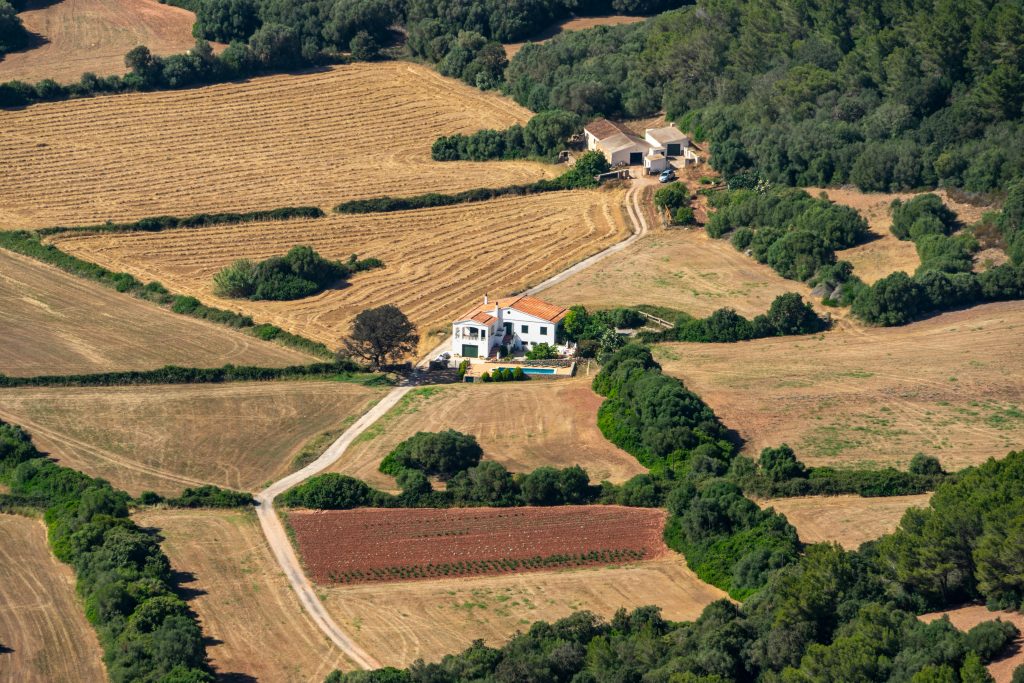
Less than 70 years ago, Spanish farmland looked completely different.
Fields were not empty or uniform and trees and shrubs were part of the system, integrated directly into fields and along their edges.
To be clear, farmers weren’t trying to “protect the environment”, they were merely doing what worked best.
Trees provided fruit, timber, and firewood. They also reduced erosion, improved water retention, and created microclimates that protected crops from extreme heat and wind.
Trees made farming more resilient, more stable, and often more diversified and productive in total output.
When agriculture became bigger, not better
As food demand grew, Spanish agriculture was pushed to scale up. Mechanisation spread quickly, and farming increasingly had to adapt to the needs of larger machines and bigger markets.
That meant wider, more uniform fields, fewer obstacles, and simpler cropping patterns. Trees, hedgerows, and mixed plantings were often seen less as assets and more as things that slowed production, so many were removed.
Over a relatively short period, diverse agricultural landscapes were replaced by more streamlined systems built for efficiency.
This change was not driven by technology alone. It was also shaped by economic incentives and agricultural policy, especially the European Common Agricultural Policy.
Subsidies often favored land that counted as directly productive farmland, which encouraged specialisation and made it harder to justify keeping trees or hedgerows in place.
In effect, biodiversity could become a financial disadvantage. For many farmers, the choice was not simply ideological but economic: remove the trees, or risk losing income.
The result was a rapid restructuring of the countryside, not a gradual evolution, and it’s had a huge impact on soil quality.
The hidden consequences of monoculture
At first glance, monoculture systems, where a single crop is grown repeatedly, may appear neat and efficient. But their long-term consequences are already being felt.
Declining food quality
When soil health declines, the quality of food decreases alongside it. Crops tend to contain fewer nutrients, while farmers rely more heavily on fertilisers and chemical inputs to maintain yields.
A 2004 US study found important nutrients in some garden crops are up to 38% lower than they were in the middle of the 20th Century.
This shift is often invisible to consumers, but it directly affects both food quality and long-term health.
Higher levels of pollution
As soils lose fertility and structure, their ability to retain and filter water declines.
Combined with intensive agrochemical use, this can increase contamination of groundwater and surface water.
Increased exposure to climate stress
In recent years, Spain has been hit by more frequent and intense heavy-rainfall events such as DANA (Depresión Aislada en Niveles Altos).
On healthy soils, more of that water infiltrates. On degraded soils, more runs off, increasing flooding, erosion, and pollutant transport into rivers and aquifers.
In that sense, the storm comes from the atmosphere, but its damage is strongly shaped by soil condition on the ground.
The threat of desertification
Spain is one of the European countries most exposed to desertification, with up to 75 percent of its territory at risk.
At the same time, landscape fragmentation and rural abandonment contribute to large-scale wildfires. Spain loses tens of thousands of hectares each year, with estimates often reaching around 120,000 hectares annually.
These challenges are interconnected and closely linked to how land is managed.
The dehesa: a system that still works
OK time for some good news: solutions to the soil problem already exist.
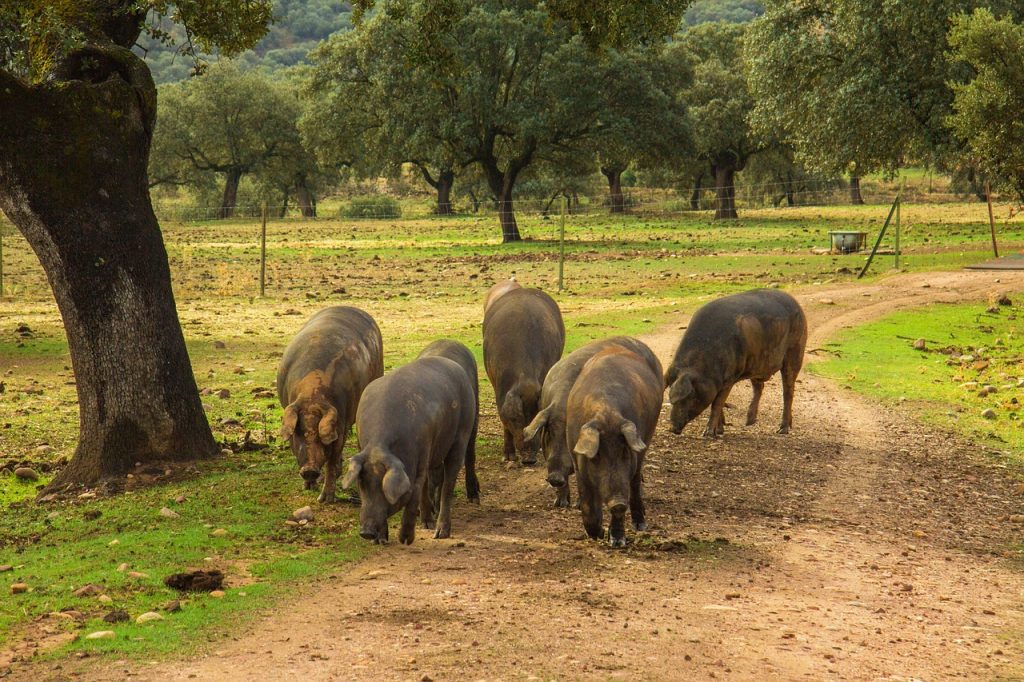
As I mentioned at the beginning, Spain has a long tradition of integrated farming systems, such as the “dehesa”, where trees, pasture and livestock coexist.
Trees help shade the soil, reduce evaporation, and add organic matter, while livestock can recycle nutrients through manure.
These symbiotic systems can be more resilient and resource-efficient than separated crop and tree production.
In some cases, land-equivalent ratios show even higher combined productivity than monoculture systems, but the exact gain varies by species, management, and climate.
What can you start doing?
Food is one of life’s enduring pleasures, so how can you ensure you’re eating in a way that benefits you and the planet?
- Buy products from farms using agroecological or extensive grazing systems, because consumer demand helps keep those farms afloat.
- Look for products tied to well-managed dehesa landscapes e.g. acorns, cork, Iberian pork, lamb, or other local foods from extensive systems.
- Support local markets, cooperatives, and small producers, since they often preserve more mixed and climate-resilient farming practices.
- Back policies and organisations that protect high-nature-value farming, because these systems usually need public support to survive in a market optimised for intensive monoculture.
- Reduce food waste and eat less industrially produced food overall, since lower pressure on land can make sustainable production more realistic.
A simple rubric to help
If you want the safest shortcut for identifying products with stronger traceability and potentially better farming practices, look for:
- a protected-origin seal (D.O.P. /P.D.O.),
- an organic certification if that fits your priorities,
- and clear language about extensive grazing, agroforestry, or dehesa production
- shop at a local store where you can ask about product provenance.
For example, with Iberian ham, the Jamón Ibérico Dehesa de Extremadura label is one useful indicator to look for, while the black, red, green, or white seal provides additional information about breed and production methods.
Building a more transparent food system
At Planeta Sana, we aim to make eating better for yourself and the planet easier.
We’re developing a directory of restaurants, producers, and shops aligned with more sustainable and health-conscious practices.
Not perfect ones, but better ones.
If you know places that prioritise seasonal ingredients, support local producers, or care about how food is grown, you can contribute.
If you’d like to be featured or make a recommendation, please contact us via email at contact@planetasana.com or through Instagram @planetasana
Because change does not only come from policies. It also comes from awareness and everyday decisions.