
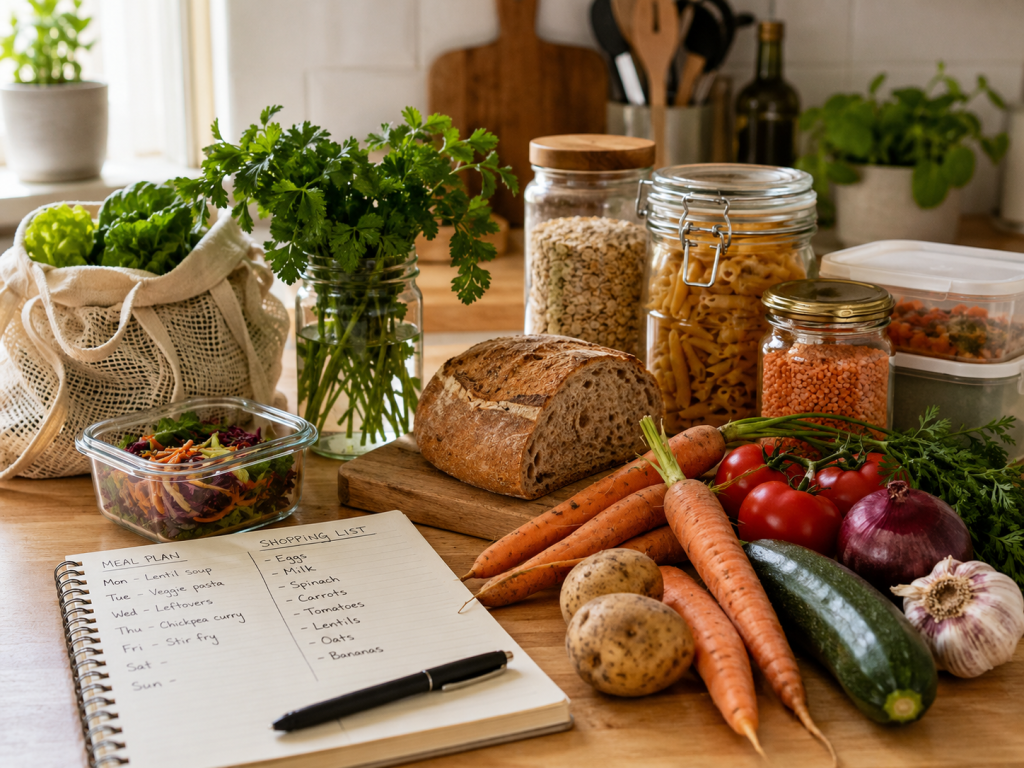
Food waste at home rarely happens because people don’t care. More often, it happens because real life gets in the way. The week becomes busier than expected. The herbs get pushed behind the milk. The leftovers are saved with good intentions, then quietly forgotten.
Learning how to reduce food waste at home is not about building a perfect zero-waste kitchen. It’s about making small changes that fit the way you actually shop, cook, eat, and live.
Food waste matters because we are not only throwing away food. We are also wasting the water, land, labour, transport, packaging, refrigeration, and energy that helped bring that food into the kitchen.
Studies have found that food loss and waste account for an estimated 8–10% of global greenhouse gas emissions. It’s estimated that households are responsible for around 60% of that wastage, making the kitchen one of the most important places to reduce it.
The good news is that reducing food waste starts with ordinary kitchen habits. Not guilt. Not perfection. Just fewer forgotten ingredients, better use of what you already bought, and a kitchen that works with your life instead of against it.
How Food Waste at Home Happens
Most food waste begins before anything reaches the bin. It starts at the shop, when we buy for the version of ourselves who will definitely cook five fresh dinners from scratch. It starts in the fridge, when older ingredients sit behind newer ones. It starts when leftovers go into an opaque container and disappear from memory.
These everyday habits have a surprisingly large impact. One of the biggest causes is overbuying. This does not always look dramatic. It can be one extra bag of spinach, a second loaf of bread “just in case,” or a multi-buy offer that seems cheaper until half of it spoils.
Another cause is poor visibility. Food that is hidden is easy to forget. A crowded fridge can make a full kitchen feel like there’s “nothing to eat,” even when there are enough ingredients for several meals.
Then there is the emotional side. Many people waste food because they’re tired, busy, stressed, caring for others, managing health needs, or trying to make meals work around unpredictable routines. A realistic approach has to account for that. A system that only works during a perfect week is not really a system.
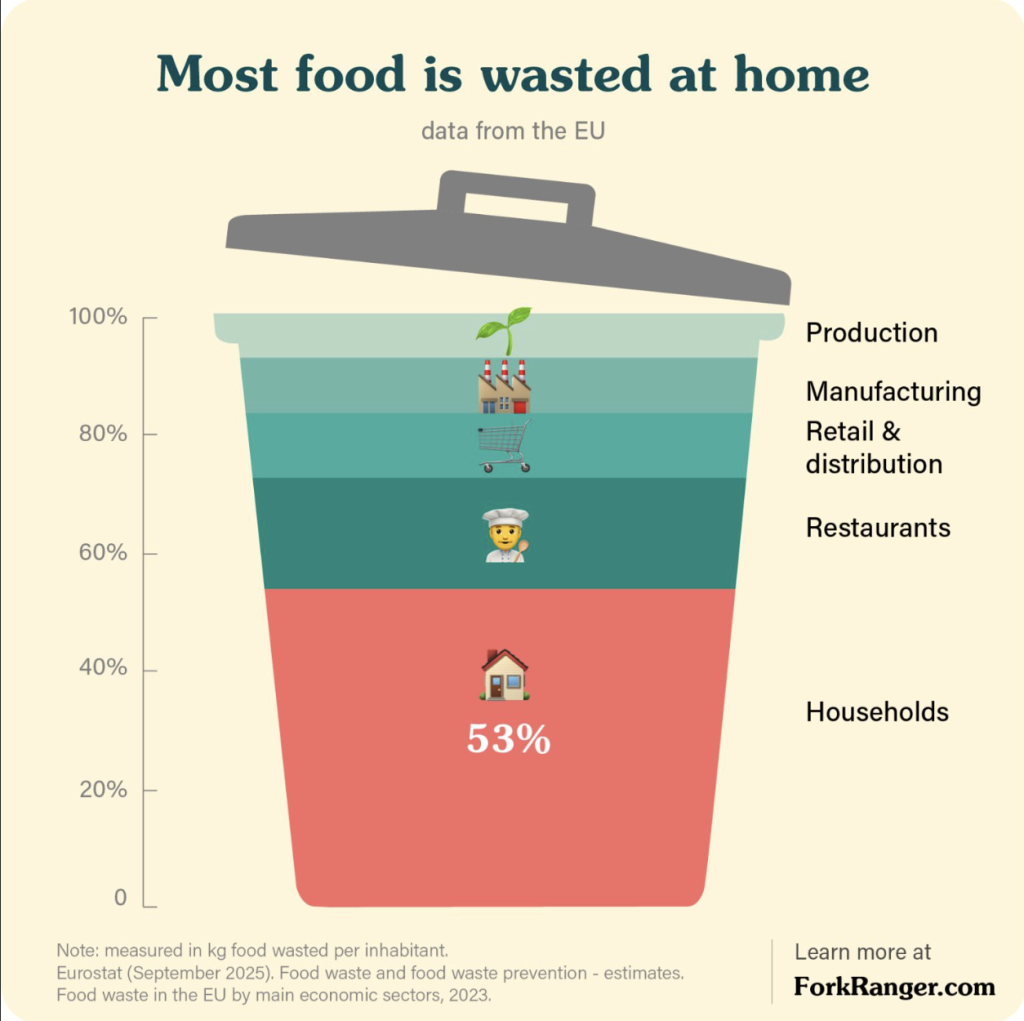
Households account for 53% of food waste in the EU. Source: Eurostat (2025), visualisation by Fork Ranger.
4 Ways To Reduce Food Waste at Home
1. Start with what you already have
The simplest way to reduce food waste at home is to make food easier to see, use, and enjoy before it spoils.
Start by checking what you already have before buying more. This sounds obvious, but many of us shop from memory rather than from our actual fridge and cupboards. That is how duplicate jars, forgotten vegetables, and half-used ingredients build up.
A useful weekly habit is a quick kitchen check:
- What needs to be used in the next few days?
- What is already cooked?
- What fresh produce is close to spoiling?
- What pantry items could become the base of a meal?
- What can be frozen now instead of thrown away later?
This shifts the question from “What do I want to buy?” to “What can I make from what I already have?”
Kelly D’Amico, MBS, founder of Made to Sustain, recommends creating a simple shopping system that makes it easier to buy only what you’ll realistically use.

“I use a grocery shopping template that helps me plan vegetables, fruit, proteins, and carbohydrates before I shop. If a full system feels overwhelming, simply labelling and dating leftovers can make a huge difference by reminding you what needs to be eaten first.”
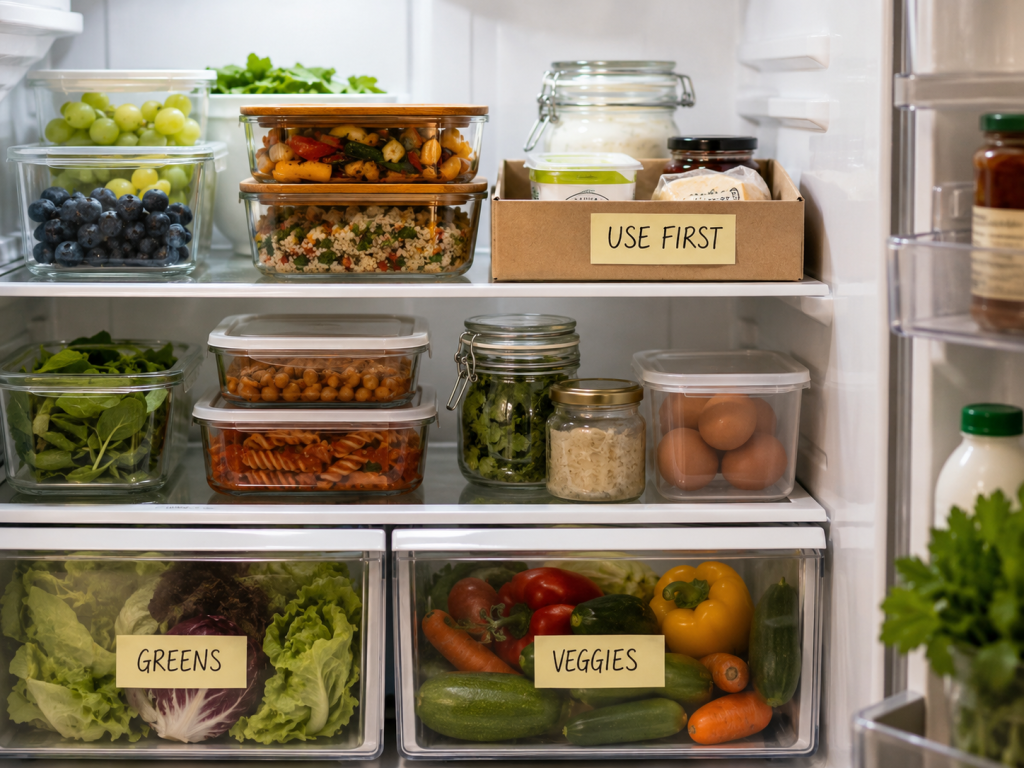
Another helpful habit is to create a visible “use first” area in the fridge. This can be a box, a shelf, or simply a clear space where you place opened items, older produce, and leftovers that need attention.
Food that is visible is much more likely to be eaten.
2. Plan meals around flexible ingredients
Meal planning helps, but only when it reflects your actual week. A strict seven-day plan can reduce waste for some people, but for many households it creates a new problem: the plan falls apart, and the ingredients do too.
A better approach is to buy flexible ingredients that can move between meals. Rice, eggs, potatoes, beans, pasta, lentils, bread, yoghurt, leafy greens, roasted vegetables, and seasonal fruit are useful because they can become several different things.
Spinach can go into pasta, soup, omelettes, wraps, or grain bowls. Cooked rice can become fried rice, a soup filler, a side dish, or tomorrow’s lunch. Roasted vegetables can be used in wraps, blended into soup, folded into pasta sauce, or added to a salad.
| Ingredient | First Use | Backup Plan If It’s Getting Old |
| Leafy Greens | Salads, wraps, grain bowls | Add to soup, pasta, omelettes, or smoothies |
| Bread | Toast, sandwiches | Freeze slices, make breadcrumbs, croutons, or French toast |
| Cooked rice | Side dish, lunch bowl | Make fried rice, soup filler, or stuffed vegetables |
| Roasted vegetables | Dinner side | Blend into soup, add to pasta, wraps, or grain bowls |
| Herbs | Garnish, salad, sauce | Blend into pesto, freeze chopped, or stir into yoghurt sauce |
| Bananas | Snacks, breakfast | Make banana bread, pancakes, smoothies, or freeze slices |
The goal is not to remove choice. It is to buy food that gives you more ways to recover when plans change.
3. Store food so it lasts longer
Good storage is one of the most effective food waste solutions because it gives you more time to use what you buy.
A few simple changes can make a real difference:
- Keep leftovers in clear containers so they’re easy to see.
- Label cooked food with the date if you often forget when it was made.
- Store older food at the front of the fridge and newer food behind it.
- Freeze bread, sauces, chopped fruit, cooked grains, and extra portions before they spoil.
- Keep dry goods in sealed containers to protect them from moisture and pests.
- Store herbs properly instead of leaving them loose in plastic bags.
Fridge organisation matters too. A crowded fridge makes it harder to see what is inside. When possible, leave some space around items and keep similar foods together.
The goal is not to create a perfect Pinterest fridge. The goal is to make your food easier to find before it becomes waste.
“Storing your food properly is one of the biggest food-saving habits you can adopt,” says D’Amico. “About 30% of all food grown is wasted every year, much of it at the consumer level. Learning how to store food correctly helps it last longer and saves money by reducing the amount you throw away.”
Get Creative with Leftovers
Anti-waste cooking is not about complicated recipes. It is about learning how to turn small amounts of food into something useful before they become waste.
Many ingredients that look slightly tired are still perfectly usable if they are safe to eat. Soft vegetables, stale bread, overripe fruit, cooked grains, and small portions of yesterday’s dinner can often become the base of easy meals.
According to D’Amico, understanding food spoilage is just as important as reducing waste.
“Some people eat food that’s no longer safe simply because they don’t want to waste it, while others throw away perfectly good food because they misunderstand the difference between ‘best before,’ ‘use by,’ and ‘sell by’ dates. Learn the signs of food spoilage before taking a risk. If something looks, smells, or tastes off, it’s better to compost it than eat it.”
Here are some practical anti-waste cooking tips:
- Use soft vegetables in soups, stews, pasta sauces, curries, omelettes, or tray bakes.
- Turn overripe bananas into banana bread, pancakes, smoothies, or frozen slices.
- Use stale bread for croutons, breadcrumbs, French toast, bread pudding, or panzanella-style salad.
- Add cooked grains to soups, fried rice, grain bowls, or stuffed vegetables.
- Blend herbs into pesto, yoghurt sauce, salad dressing, or marinades.
- Turn leftover roasted vegetables into soup, wraps, or pasta sauce.
- Use cooked meat, beans, or lentils in wraps, salads, soups, pies, or quick pasta dishes.
Food scraps can also be useful. Clean vegetable scraps such as carrot peels, onion ends, celery leaves, mushroom stems, and herb stalks can be saved for homemade stock.
Keep a container or bag in the freezer and add scraps as you cook. Once it’s full, simmer them with water, herbs, and seasoning to create a base for soups, stews, and sauces.
Some peels, stems, and leaves are edible too. Broccoli stems can be sliced and stir-fried, added to soup, or grated into slaws. Citrus zest can be added to dressings, cakes, marinades, or flavoured sugar. Herb stems can be finely chopped into sauces or cooked into soups.
A good sauce can bring leftovers together. Try yoghurt with garlic and lemon, tahini dressing, pesto, tomato sauce, olive oil with herbs, or soy sauce with ginger.
The best order is simple: prevent waste first, cook what is edible, freeze what you can, and compost what cannot realistically be used.
D’Amico also encourages giving leftovers a second life rather than letting them sit forgotten in the fridge.
“If you’re bored with your leftovers, freeze them for another day or get creative and turn them into something new.”

How to Build a Realistic Zero-Waste Kitchen
A zero-waste kitchen can sound intimidating, but it does not have to mean producing no waste at all. For most people, a more realistic goal is a lower-waste kitchen.
You do not need to buy a full set of matching jars or expensive eco-products to start. In fact, buying too many new “sustainable” items can become another form of overconsumption.
Start with what you already have:
- Reuse jars for storage
- Keep containers for leftovers
- Freeze food before it spoils
- Use cloth bags or reusable shopping bags
- Plan meals around opened ingredients
- Keep a list of easy meals for leftovers
- Choose loose produce when practical
- Avoid buying more fresh food than you can realistically eat
A realistic zero-waste kitchen should support your life, not make it more stressful.
This matters from an inclusion perspective, too. Not everyone has the same time, income, mobility, storage space, health, or access to sustainable shops. Some people rely on convenience foods because of disability, chronic illness, caring responsibilities, or demanding work schedules.
Sustainability should be flexible enough to include different realities. The best system is the one you can actually maintain.
Save Money by Wasting Less
Reducing food waste is often framed as an environmental habit, but for most households it is also a financial one. Every forgotten leftover, stale loaf, spoiled herb bunch, or unused bag of salad is part of the grocery budget disappearing.
The most effective money-saving habits are simple: check your kitchen before shopping, make a list, buy smaller amounts of highly perishable foods, freeze food early, use leftovers for lunches, plan one use-it-up meal each week, and avoid multi-buy offers unless you can genuinely use the extra food.
It can help to track what you throw away for one week. Not forever. Just one week.
Notice the patterns. Are you throwing away salad leaves? Buying too much bread? Forgetting leftovers? Letting herbs spoil? Cooking too much rice or pasta? Once you know your household’s usual waste pattern, the fix becomes more obvious.
Small adjustments can save more money than dramatic lifestyle changes.
Remember, Progress Over Perfection
Learning how to reduce food waste at home isn’t about being perfect. It’s about paying better attention to the food already in your kitchen.
A lower-waste kitchen is built through small, repeatable decisions: buying what you can realistically use, storing food so it stays visible, giving leftovers a plan, freezing food before it spoils, and accepting that sustainability has to fit real life.
Food waste is connected to money, resources, labour, health, and the planet. But at home, it often starts with something very simple: opening the fridge, seeing what’s already there, and choosing to use it before buying more.
At Planeta Sana, sustainability is about making practical choices that support both people and the planet.
Reducing food waste is one of the simplest places to start. It helps you make the most of your grocery budget, use resources more responsibly, and build habits that fit real life rather than striving for perfection. Small, consistent changes in the kitchen can have a lasting impact on your finances, your well-being, and the environment.
Reducing food waste doesn’t require a perfect zero-waste lifestyle.
Simple habits like storing food properly, understanding food spoilage, planning groceries realistically, and giving leftovers a second life can make a meaningful difference over time.